
- News
- Horse Racing
- Racing Preview
- AQHA Racing Challenge
- Breeding
- Sales
- Quick Stakes Results
- Detail Race Results
- Qualifiers
- Leader Board
- Leading Sires
- Videos
- Auction Leaders
- Q-Racing
Streaming Video

© Courtesy AQHA
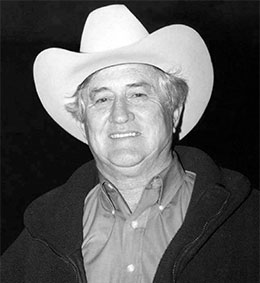
by Greg Thompson, StallioneSearch.com
DALLAS, TX—APRIL 27, 2020—On the cusp of entering into his fifth Hall of Fame for his efforts as a trainer, multiple Hall of Fame trainer Charles "Bubba" Cascio sits down and talks with StallioneSearch.com.
Cascio and three others, including his brother-in-law Frank Merrill, are set to be enshrined in the National Cutting Horse Association(NCHA) Members Hall of Fame.
Already inducted into the AQHA Hall of Fame, the Ruidoso Racehorse Hall of Fame, the Texas Horse Racing Hall of Fame, and the Texas Cowboy Hall of Fame, Cascio received the notification letter that he would be inducted into the NCHA Hall of Fame. Without even having to look to cross reference, I can safely say there is not another person in history that has been inducted into all five.
At the age of 87-years-young, Cascio epitomizes the definition of a trainer in Quarter Horse racing lore that you could safely use the term 'living legend' without any reasonable resistance.
Aside from all of the accomplishments as a trainer within the last 50-years in the sport, Cascio is someone that also has roots the stem all the way back to his native Houston, Texas, where he uncle managed Epsom Downs (in Houston) before pari-mutuel racing in Texas was outlawed in 1937. Cascio is someone who has seen the organization of Quarter Horse racing from its beginning, all the way to its modern day status.
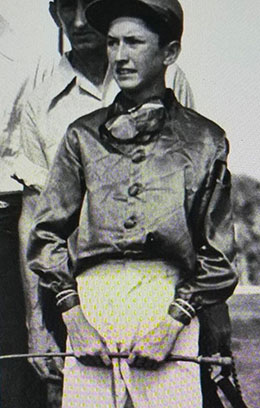 C.W. "Bubba" Cascio began his career as a jockey.
 ca. 1947 Del Rio, Texas
Cascio has been hailed as an early pioneer of the cutting horse ranks, with his heyday being in the 1950's and into the 1960's. His cutting record stopped after 1969, as Cascio pursued Quarter Horse racing full-time.
The decision to do so was greatly influenced by the fact that Cascio had already won the All American Futurity(G1) in 1968 with Three Oh's. Cascio has said that Three Oh's was a horse that he had in training as a cutting-horse for a short time before trying him on the racetrack with great success.
His exploits as a trainer of racing Quarter Horses has been well-documented.
Cascio, like trainers Bob Baffert and D. Wayne Lukas, also eventually converted over to training racing Thoroughbred s. Cascio trainee Gold Storm, who won six stakes races and earned $507,545, competed in the 2004 Breeder's Cup Sprint(G1) at Lone Star finishing a beaten ninth in the prestigious event.
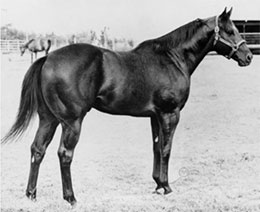 Cascio started Three Oh's in cutting before winning the 1968 All American Futurity.
ca. 1970
Cascio started Three Oh's in cutting before winning the 1968 All American Futurity.
ca. 1970
StallioneSearch was able to catch up with the five-time Hall of Fame inductee from his home in Tolar, Texas.
StallioneSearch.com: First off, congratulations on the news of the induction into your fifth hall of fame. Tell me about the gratification that being enshrined yet again from your accomplishments of your career.
Cascio: I am pretty fortunate for people to be as nice to me as they have been. I really appreciate the recognition from all of the hall of fame inductions. The one that I really wanted to get was this last one into the National Cutting Horse Hall of Fame.
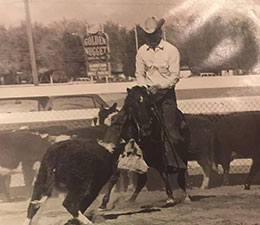 C.W. "Bubba" Cascio got started riding cutting horses for famed trainer Matlock Rose.
 ca. 1963
So for me to be in the hall of fame with the people I competed with and knew really well is a great feeling. I really appreciate them putting me in this, and now I think I've run out of hall of fame's for them to put me in. I don't think there is any more left that would have me in.
StallioneSearch.com: Most of us in Quarter Horse racing are familiar with your career as a race horse trainer, but within the timeline of your career, when did the cutting horse part take place?
Cascio: When I was much younger I was working for Lester Goodson, past president of the AQHA, and my father (Jake) was training his race horses and I was riding them. I was also riding races for trainer Johnny Ferguson.
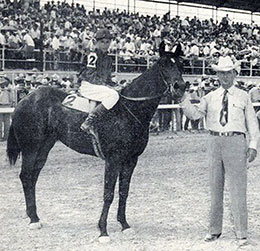 C.W. "Bubba" Cascio aboard Goodson's Snappy at Del Rio with owner Lester Goodson at the bridle.
 ca. 1947 Del Rio, Texas
That is where I got my start in the cutting horse business and that lasted through the 1950's, all the way to the 1970's.
StallioneSearch.com: So you were doing not only the cutting horses, but also training race horses at the highest-level at the same time?
Cascio: Yes. I was training the race horses in the morning, and then in the afternoons I would switch over and handle the cutting-horses.
StallioneSearch.com:Again we are more familiar with Bubba Cascio the race horse trainer, but I have seen photos that show that you actually started out as a jockey. Tell me about your time in the saddle.
Cascio: I started out riding for an old man in the Thoroughbred business by the name of Will McKown, and he got me galloping horses for him. I left and went to East St. Louis in 1947 to learn more about the Thoroughbred s, because that is where the money was at in those days.
I stayed a while before coming back home, because I wanted to finish school. When I got back to Texas is when I started to ride the Quarter Horses, and that was because there just wasn't any Thoroughbreds around back in those days. In those days, Del Rio (Race Track) was the "Los Alamitos" of the Quarter Horse racing world back then.
They would really pack the spectators in there at Del Rio, and it was a really big deal back then. They had the great runners of Quarter Horse racing of those days running at Del Rio or in Arizona. We would go from Del Rio, and then move over to El Paso from there.
I rode several really nice mares that would go onto sire some world champions later on as broodmares. I eventually got too heavy to ride, and then switched over to riding the cutting horses. I rode races for about three or so years.
StallioneSearch.com: You have seen and lived through lots of up and downs in the Quarter Horse racing industry. As you know, we are facing a huge set back in racing due to the Coronavirus pandemic in the present day, on top of the other problems that we were already facing in the industry. Can you recall at a time in history when something so massive as the Coronavirus had come in to hamper racing as much as this pandemic has in 2020?
Cascio: No. I have not witness anything that has had this much of an effect on racing or in life. This is the worst thing that I have seen in my lifetime, and unfortunately it isn't over yet. We've never seen anything like this that has grinded racing to almost a complete standstill in some places. And it affects everyone on down the line, all the way to the guy selling feed at the feed store. But no, I'm thankful I've never seen anything of this magnitude before and I hope we don't see it again.
StallioneSearch.com: How much of the current happenings of racing do you pay attention too, and how well would the trainer Bubba Cascio fit into today's game of Quarter Horse racing?
Cascio: I think I would fit in there pretty good because I am and always felt like I was a pretty good politician. During my time, I always seem to work with the best owners in the business as well. I trained horses for B.F. Phillips, J.R. Adams, Louis Brooks, R.D. Hubbard, J.E. Jumonville, Jr., and they were the biggest owners in the industry in their day.
But I do feel like the industry has taken a downturn with all of these trainers getting ruled off, and all of the bad publicity. The popularity is falling off because of it. The wagering handle on Quarter Horse racing has also seemed to go down so much as well. There are definitely some elements in the game that are keeping us back at present.
StallioneSearch.com: You trained the legendary Dash For Cash throughout his career, and for most of the younger generation coming into the Quarter Horse racing business know that his name evokes the legendary recognition. But without a lot of video or fanfare existing to experience just how good he was, it was hard to really equate just how legendary of a runner that he was. Would you please recollect for us of just how good of a race horse and a sire that Dash For Cash was?
Cascio: His legacy in racing and breeding in the Quarter Horse industry is still being felt throughout. He was such a fast horse, and such a great horse to train. He was a natural runner, and was one of those horses that just loved to run. He would lay down in his stall about 75% of the day resting, and he rested himself what seemed like all the time. He also never made any mistakes as a runner. He was just a magnificent horse.
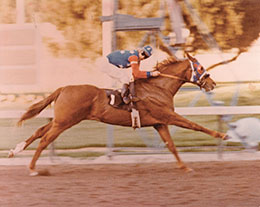 Jockey Jerry Nicodemus turns and looks back at his foes while winning the Champion of Champions in track record time of :21.17 at Los Alamitos Race Course.
 ca. 1976 / Los Alamitos Race Course
Nicodemus said to me, "I sure can do that boss."
And that is exactly what he did in the race. He got so far in front of them, Nicodemus turned around and glared at them other horses. In the famous photo of Dash For Cash you can see Nicodemus's heels are down, and he has a firm hold of Dash For Cash, and they still went that fast.
Like I said, he was just a tremendous runner, and Dash for Cash was such a huge influence on the Quarter Horse racing breed as a sire. Without Dash For Cash, there wouldn't have been First Down Dash.
StallioneSearch.com: Bubba the industry holds Dash For Cash in such high regard with his accomplishments on the track, and this is a horse that didn't win the All American Futurity or the All American Derby. Can you imagine if he would have won either one of those races of what level of legendary status he would even be thought of in?
Cascio: Here is what happened with the All American. It rained all night and all morning long. And that was back when we had just one day of qualifying at Ruidoso. I believe that day there was 26 or 27 races that day for qualifying. Dash For Cash drew the first race of that day in the trials, and he won his trial by two to three lengths, and "aired" the field in his trial. It rained till about noon in Ruidoso, and then stopped raining as the sun can out. They went to dragging the track, and with the sun shining, and by four-o'clock the runners were kicking up dust as the horses ran down the track.
There was not a horse that day that qualified until after the 11th race had been run. The times all got much faster as the track condition improved. It was just a matter of Ruidoso weather getting in the way once again to prevent qualifying. The ole' mountain got me that time.
But it is my thought that people don't remember a horse for what he had done in the first part of his life, instead I think they remember what the horse does in the second or perhaps that last part of their career that makes people remember them. This pertains if he goes out a winner in a big stakes race or he carries on to make a great stud horse. Dash For Cash was that kind of horse for sure.
StallioneSearch.com: What factors do you contribute to being so successful with the two-year old running Quarter Horses?
Cascio: It was how we worked to develop them after they were being broke. The way I liked to get my colts broke is that they would never go in the starting gate until I knew that when we would 'drop them down' they would fall in that ground and really run. When you break them away from the gate the second time, they hit the ground and know what they are doing. They know how to drop down and run.
How many times do you see it when trainers cheated the gate training and have their horses running all over the race track, and have to the jockeys whoopin' on them to try to get them to run straight? That is why. You know damn well that when a horse knows how to run when you kick them gates, you are going to be so better off.
Back in my day, I didn't have to have the schooling races when I went to Ruidoso. By the time we would take the horses to Ruidoso, they were ready to run. You have to get a horse broke before you get him to running. We broke them to be a horse first, and a then made them into race horses.
StallioneSearch: Many top conditioners in the modern game of Thoroughbred racing have ties that lead back to Quarter Horse racing. D. Wayne Lukas, Todd Pletcher, Steve Asmussen, and Bob Baffert are just a few of the trainers that got started in Quarter Horse racing, and now are the "who's who" of Thoroughbred trainers. You did the same conversion yourself from being a prominent Quarter Horse trainer over to the Thoroughbreds. And with the Thoroughbreds you had some success, and even ran a horse in the Breeders' Cup in Dallas at Lone Star Park. Talk to me about the decision to switch.
Cascio: That was one of the worse mistakes in my career I have ever made in my life. The Thoroughbred racing business was and still is just so much larger than that of Quarter Horse racing business, and I had decided that I was going to buy me a training center that was centrally located between San Antonio, Oklahoma City, Delta Downs, and Sam Houston Race Park in Houston was just 75 miles from my place.
The idea was for me to stay at home and train my Thoroughbreds, and run at tracks that ran Thoroughbreds all year long. Texas racing opened with a flurry in the 1990's, and they had good purses for the first two years. After that it went way down. The purses went to nothing, and there just wasn't much money in it after that. It literally went to hell and I hung on as long as I could. Realistically, it was the smart decision to make going to the Thoroughbreds for the difference in money, and I eventually had some good Thoroughbred horses.
StallioneSearch.com: You have a connection to the making of the movie Casey's Shadow, which to this day is the only movie centered around the sport of Quarter Horse racing of any significance. Tell me how you were involved in the process of making the film.
Cascio: The producers came in and explained the movie, and I was introduced and got to talking with the main character Walter Matthau. They told me that they were in need of some horses for the movie, and I told them, "I ain't got but 87 horses over there in the barn, so how many do you need?". They said they felt that they needed about 10 horses to run from the gate, and a couple of extras.
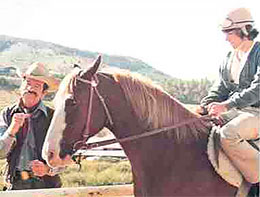 Actor Walter Matthau stared in the movie Casey's Shadow shot on location at Ruidoso Downs.
 ca. 1977 / Columbia Pictures
The rest of the horses used in the movie from my barn belong to B.F. Phillips.
Both of my sons were in the movie in some of the parts, my grooms are in the movie, and I have a few seconds of me standing next to the one of characters in movie. The filming was shot during the meet, and we would get through in the mornings and go in the afternoons to shoot.
Some of them jockeys in the room that weren't making a whole lot of money would come out during the weekdays to make a little extra money shooting this movie. We weren't running but three days a week during them days in the 1970's, so they would make them so money on the side performing in the movies. I will say that the movie had a great impact for the industry when it came out for making Quarter Horse racing more popular with the public.
StallioneSearch.com: As a reporter, I have had the opportunity to talk to many of the folks we call a "legend" in the sport of Quarter Horse racing. When I have interviewed those legends, so many of those horsemen hold you in such high regard. For you, who was the Quarter Horse trainer that you admired and respected as a horsemen?
Cascio: For me, that trainer would have to be Blane Schvaneveldt. He was such a great horsemen, and someone I thought a lot of. He was there at the barn every day, and the reason I know that is because I was there every day as well. Blane and I would spend many Sunday mornings as the only ones out there on our pony horses watching training, and we would talk for hours.
One time I left Los Alamitos, but I sent a horse up to him to break its maiden. The owner had told me that he would pay me a certain amount of money if I could get this horse to break its maiden, and therefore I sent it out to Los Al to Blane to do just that. The horse ended up winning, and was eventually sold.
Blane called and told me that he wasn't going to send me a training bill on this horse. When I heard that, I insisted that I pay him for training. I told him that I had already put the money in the mail to cover the training. I then told Blane, "besides I already made another $5,000 off of you anyway. Blane then asked me, "how in the world did you make $5,000 off of me?" I then told him that I had a bet with someone for $5,000 that one day you would be working for me. That story really tickled Blane.
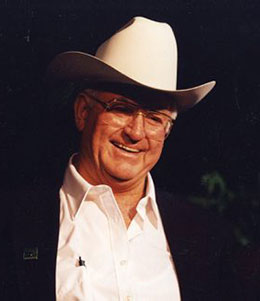 Cascio credited legendary Quarter Horse trainer Blane Schvaneveldt as a great horseman.
© Los Alamitos Race Course
Blane would tell me, "Bubba, it will just really does something to your horse if you do it the day before. They will walk into that gate and stand, and be more comfortable. So I started doing that very thing, and noticed that they started handling things a whole lot better. I put that in my program from then on.
StallioneSearch.com: The racing world recently lost the legendary jockey, Jerry Nicodemus, and I knew that you and him were very close friends for years. Talk to us about your relationship with the hall of fame jockey.
Cascio: He was something else. I just don't believe that there has ever been another Quarter Horse jockey in history that could 'out ride' Nicodemus. In the mornings, he would be there waiting on me every morning to get started loping horses. He was always there waiting on me, and I would never have to be waiting on him. Nicodemus just wasn't one to complain about anything either. He would never say, "well how many more do we have to go today". When we got through, he would say "let's go eat breakfast."
One the reasons he and I had gotten going with some success together in the early days was because he would come to the farm and help break the babies during the winter. He was such a helluva rider that he would get those horses going so well, and he would get so accustomed to them that he would know what they were going to do when they started running. It just made it great for everybody.
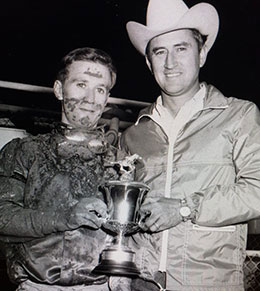 C.W. "Bubba" Cascio and jockey Jerry Nicodemus after winning the 1968 All American Futurity with Three Oh's.
ca. 1968 / Ruidoso Downs
But 'Nic' was always on my side, and was always a gentlemen in front of all my owners. When we would win a big race we would go out to eat dinner that night to celebrate, and Jerry was always such a gentlemen around the owners. All of them loved Nicodemus. If we ever lost a close race, and just get barely get beaten by a nose, I would tell the owners, "we would have gotten outrun by more than that if Nicodemus wasn't on your horse."
A couple of days before his death he called me on the phone, and he and I got to laughing about things. He told me, "Bubba, I got to thinking about some of the stuff we pulled back then and got away with, and I just got to laughing." He told me the story he was thinking of, and we got to laughing with each other, and that was just a few days before he passed. But I loved him to death, and I pray for him every night. And I will be doing that until the day that I die.
|
||
 Newsletters
 Facebook
Copyright © 2026 StallioneSearch, LLC, All rights reserved internationally.